The landscape of search engine optimization (SEO) is rapidly evolving, driven by advancements in artificial intelligence (AI). As we look towards 2026, understanding the future of AI in SEO is crucial for businesses aiming to maintain a competitive edge. This article will delve into emerging trends, the impact of AI on search engines, effective strategies for businesses, and how marketers can prepare for these changes. By exploring these aspects, readers will gain insights into how AI is reshaping the SEO landscape and what they can do to adapt.
As we approach 2026, several key trends in AI-driven SEO are emerging that will significantly influence how businesses optimize their online presence. These trends include the integration of generative AI, enhanced personalization, and the use of advanced algorithms to improve search results.
Generative AI is revolutionizing SEO strategies by enabling the creation of high-quality content at scale. This technology uses machine learning algorithms to analyze existing content and generate new, relevant articles, blog posts, and other materials. For instance, businesses can leverage generative AI to produce tailored content that resonates with their target audience, improving engagement and search rankings. The ability to automate content creation not only saves time but also allows for a more dynamic approach to SEO, adapting quickly to changing trends and user preferences.
While generative AI offers significant advantages in content creation, it’s important to consider its practical applications and potential limitations.
Generative AI in Content SEO: Use Cases & Pitfalls
This paper studies the use cases, benefits, pitfalls, team role implications, organisational success factors and organisational barriers for generative AI in content SEO work. While AI text was perceived to be good enough for specific use cases, human edits and revisions were still needed in most cases. AI text fluffiness, factual errors, incorrect tone and mistrust in Google’s guidelines all made human edits necessary.
Generative AI in content SEO processes, 2024
Several AI technologies are shaping the future of search, including natural language processing (NLP), machine learning, and predictive analytics. NLP allows search engines to better understand user queries and deliver more relevant results. Machine learning algorithms analyze vast amounts of data to identify patterns and improve search accuracy. Predictive analytics helps businesses anticipate user behavior, enabling them to optimize their content and marketing strategies accordingly. Together, these technologies are creating a more intuitive and efficient search experience for users.
AI is set to have a profound impact on the future of search engines, fundamentally changing how users interact with information online. As AI technologies continue to evolve, we can expect significant changes in search algorithms and user experience.
AI-driven search algorithms will become increasingly sophisticated, focusing on user intent rather than just keyword matching. This shift means that search engines will prioritize content that provides genuine value to users, leading to higher-quality search results. Additionally, AI will enable search engines to adapt in real-time, learning from user interactions to refine their algorithms continuously. This evolution will challenge businesses to create more meaningful and relevant content to maintain visibility in search results.
Further research highlights how AI algorithms are being refined to predict consumer search intent and optimize keyword strategies, leading to measurable improvements in SEM performance.
AI-Driven SEM: Keyword Optimization & Intent Prediction
The exponential growth of digital advertising expenditures necessitates sophisticated optimization strategies to maximize search engine marketing (SEM) effectiveness. This research presents an innovative framework integrating artificial intelligence algorithms with consumer search intent prediction to enhance SEM keyword optimization performance. The proposed methodology employs multi-layered clustering techniques and predictive modeling to analyze search patterns and optimize bidding strategies automatically. Experimental validation using e-commerce plat-form data demonstrates significant improvements in key performance indicators, including a 23.5% reduction in cost-per-click (CPC) and a 52.9% increase in return on advertising spend (ROAS).
AI-Driven SEM Keyword Optimization and Consumer Search Intent Prediction: An Intelligent Approach to Search Engine Marketing, M Sun, 2025
The integration of AI into search engines will enhance the user search experience by providing more personalized and context-aware results. Users can expect search engines to understand their preferences and deliver tailored content that meets their specific needs. Features such as voice search and visual search will become more prevalent, allowing users to interact with search engines in more natural ways. This evolution will require businesses to optimize their content for various formats and ensure it is accessible across different platforms.
To harness the power of generative AI in SEO, businesses must adopt effective strategies that align with their goals. These strategies include optimizing content creation processes, leveraging AI tools for data analysis, and implementing best practices for AI integration.

Generative AI can significantly enhance content creation by automating the writing process and generating ideas based on trending topics. Businesses can use AI tools to analyze user behavior and preferences, allowing them to create content that resonates with their audience. This approach not only improves efficiency but also ensures that the content remains relevant and engaging. By incorporating generative AI into their content strategies, businesses can stay ahead of the competition and adapt to changing market demands.
Implementing AI in SEO campaigns requires careful planning and execution. Here are some best practices to consider:
By following these best practices, businesses can effectively leverage AI to enhance their SEO efforts and drive better results.
As AI continues to reshape the SEO landscape, marketers must prepare for the changes ahead. This preparation involves developing essential skills and utilizing the right tools to enhance AI-driven SEO efforts.
SEO professionals will need to develop a range of skills to thrive in an AI-driven environment. Key skills include:
By focusing on these skills, SEO professionals can position themselves as valuable assets in the evolving digital landscape.
Several tools can enhance AI-driven SEO efforts, including:
| Tool | Feature | Application |
|---|---|---|
| SearchAtlas OTTO | AI-powered on-page SEO automation | Streamlines content optimization |
| LLM Visibility | Optimizes for AI search engines | Improves content discoverability |
| SEMrush | Comprehensive SEO analytics | Provides insights for strategy refinement |
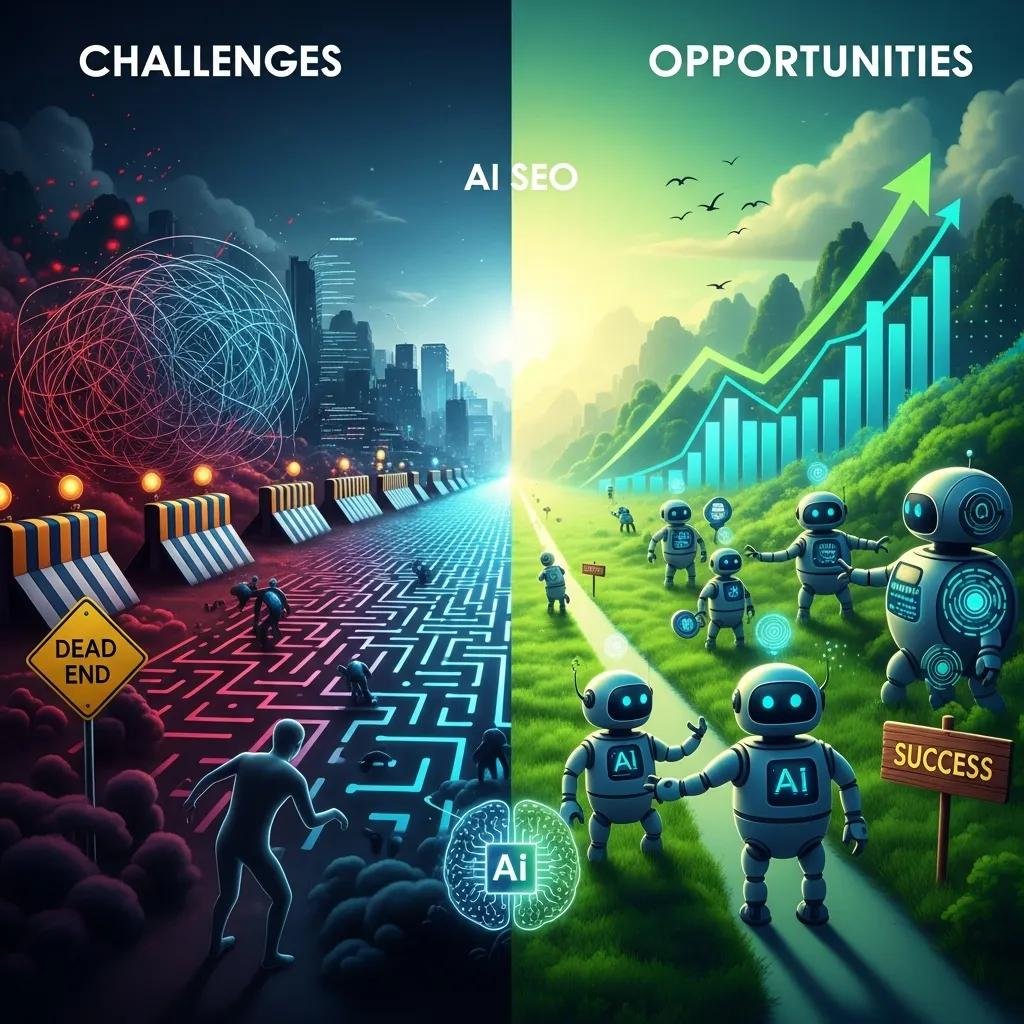
While AI presents numerous opportunities for enhancing SEO, it also poses challenges that businesses must navigate. Understanding these challenges and opportunities is essential for developing effective strategies.
The rise of AI in SEO raises important ethical considerations, particularly regarding transparency and accountability. As AI algorithms become more complex, it may become challenging to understand how decisions are made regarding search rankings. Businesses must prioritize ethical practices by ensuring transparency in their SEO strategies and being accountable for the content they produce. This commitment to ethical SEO will help build trust with users and search engines alike.
Indeed, the ethical implications of generative AI in SEO are a critical area of discussion, prompting a closer look at content ownership, biases, and information reliability.
Generative AI in SEO: Ethical Challenges & Opportunities
generative AI in SEO raises ethical questions about content ownership, biases, and the reliability of information. SEO specialists can utilize the power of AI for content assessment, fact-checking.
Transforming SEO in the Era of Generative AI: Challenges, Opportunities, and
Future Prospects, V Vajrobol, 2024
AI will create new opportunities for search optimization by enabling businesses to deliver more personalized and relevant content. As AI technologies evolve, businesses can leverage data-driven insights to understand user behavior better and tailor their content accordingly. This shift will allow for more effective targeting and engagement, ultimately leading to improved search rankings and user satisfaction. By embracing these opportunities, businesses can position themselves for success in the AI-driven SEO landscape.