
Keyword research is a fundamental aspect of search engine optimization (SEO) that involves identifying the right search terms to target for your content. Understanding how to conduct effective keyword research can significantly enhance your online visibility and attract organic traffic. This article will guide you through the basics of keyword research, its importance, and practical steps to find the right keywords for your SEO strategy. Many businesses struggle to connect with their target audience due to ineffective keyword targeting. By mastering keyword research, you can ensure that your content aligns with what users are searching for, ultimately driving more traffic to your site. We will explore the definition of keyword research, the steps to conduct it, strategies for finding relevant keywords, and how to utilize keyword research tools effectively.
Keyword research is the process of identifying and analyzing the search terms that people enter into search engines. This practice is essential for SEO because it helps you understand what your target audience is looking for, allowing you to create content that meets their needs. By selecting the right keywords, you can improve your website’s visibility in search engine results pages (SERPs), leading to increased traffic and potential conversions.
Indeed, the strategic application of SEO is crucial for enhancing a business’s online presence and fostering better engagement with potential customers.
SEO for Business Visibility and Organic Traffic Growth
The SEO increases the business visibility on the Internet in comparison with priority competitors, promotes better communication and interaction in accordance with varied requests of online buyers (customers, clients). SEO is especially important for successful retailers’ business characterized by constant bifurcations in the short and long term.
Business optimization in the digital age: Insights and recommendations, A Natorina, 2020
Search terms play a crucial role in determining your online visibility. When users enter specific keywords into search engines, the algorithms analyze these terms to deliver the most relevant results. For instance, using targeted keywords in your content can help your website rank higher in SERPs, making it more likely for users to click on your link. Effective search terms can also enhance your content’s relevance, leading to better engagement and lower bounce rates.
User intent refers to the purpose behind a user’s search query. Understanding user intent is vital for selecting the right keywords, as it helps you create content that aligns with what users are seeking. There are generally four primary types of user intent: informational, navigational, transactional, and commercial investigation. For example, if a user searches for “best SEO tools,” their intent is likely informational, indicating they are looking for resources to help them improve their SEO efforts. By aligning your keyword selection with user intent, you can create more relevant and engaging content.
Understanding the underlying purpose of a user’s search query is fundamental to crafting effective content and optimizing for semantic search.
Understanding User Intent in Web Search for Effective Keywords
user intent are fundamental to semantic search. In this paper, we investigate the association of intent with individual words of a search can be classified as either content or intent, where
Discovering and understanding word level user intent in web search queries, RS Roy, 2015
Conducting keyword research can seem daunting, but following a structured approach can simplify the process. Here’s a step-by-step guide to help beginners get started.
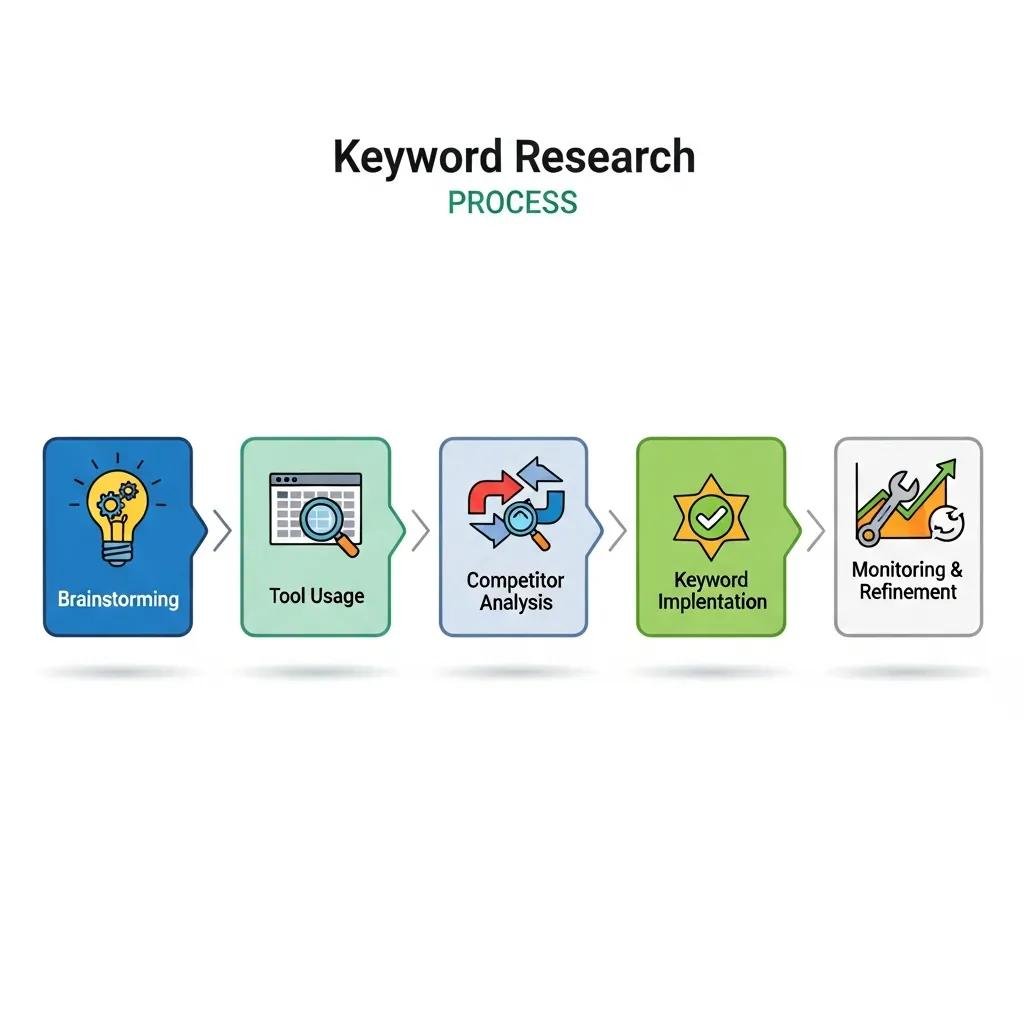
Several tools can assist beginners in conducting keyword research effectively. Some of the best options include:
Finding relevant keywords is crucial for optimizing your content and attracting the right audience. Here are some strategies and best practices to consider.
Long-tail keywords are longer, more specific phrases that users are likely to search for. For example, instead of targeting “SEO,” you might target “best SEO strategies for small businesses.” These keywords typically have lower search volume but higher conversion rates, as they cater to users with specific needs. Incorporating long-tail keywords into your content can help you attract a more targeted audience and improve your chances of ranking higher in SERPs.
The power of long-tail keywords lies in their ability to capture highly specific user queries, driving more qualified traffic to your site.
The Importance of Long-Tail Keywords in Search Engine Marketing
of search engine marketing is driven by the “long tail”, defined in this research as the many less popular keywords employed by users to search the unsponsored, organic search results,
An analysis of the importance of the long tail in search engine marketing, B Skiera, 2010
Analyzing competitor keywords can provide valuable insights into your niche and help you identify opportunities for improvement. Here’s how to do it:
Keyword research tools are essential for gathering data and insights that can inform your SEO strategy. Here’s how to use them effectively.
When selecting keyword research tools, consider the following features:
Understanding keyword metrics is crucial for making informed decisions. Here’s how to interpret them:

Local SEO is essential for businesses targeting customers in specific geographic areas. Aligning your keyword research with local SEO strategies can enhance your visibility in local search results and improve your chances of appearing in local search results and attract more nearby customers.
Local keywords are search terms that include geographic locations, such as “best pizza in New York” or “plumbers near me.” These keywords help businesses connect with local customers actively searching for their services. By optimizing your content for local keywords, you can improve your chances of appearing in local search results and attract more nearby customers.
Optimizing your Google Business Profile (GBP) is crucial for local SEO success. A well-optimized GBP can enhance your visibility in local search results and improve your chances of being featured in the local pack. By incorporating relevant keywords into your GBP description, services, and posts, you can align your keyword strategy with your local SEO efforts, driving more traffic to your business.
| Keyword Type | Description | Importance |
|---|---|---|
| Long-Tail Keywords | Specific phrases with lower search volume | Higher conversion rates |
| Local Keywords | Keywords including geographic locations | Attracts nearby customers |
| Short-Tail Keywords | General terms with high search volume | Broad reach but high competition |
In conclusion, mastering keyword research is essential for any business looking to enhance its online presence. By understanding the fundamentals of keyword research, utilizing effective tools, and aligning your strategy with local SEO, you can significantly improve your chances of attracting organic traffic and converting visitors into customers. For businesses seeking to optimize their online visibility, Digital Service Solutions specializes in AI-driven hypergrowth SEO strategies, including Google Business Profile optimization and targeted keyword research services.