On-page SEO is a critical component of digital marketing that focuses on optimizing individual web pages to rank higher and earn more relevant traffic in search engines. This article will delve into the best practices for on-page SEO, emphasizing the importance of both content and HTML elements. Readers will learn how to effectively enhance their website’s visibility through strategic optimization techniques. Many businesses struggle to attract organic traffic due to poor on-page SEO practices. By implementing the strategies discussed here, you can significantly improve your search engine rankings and online presence. We will explore essential HTML elements, content optimization techniques, technical practices, advanced semantic SEO strategies, and effective internal linking methods.
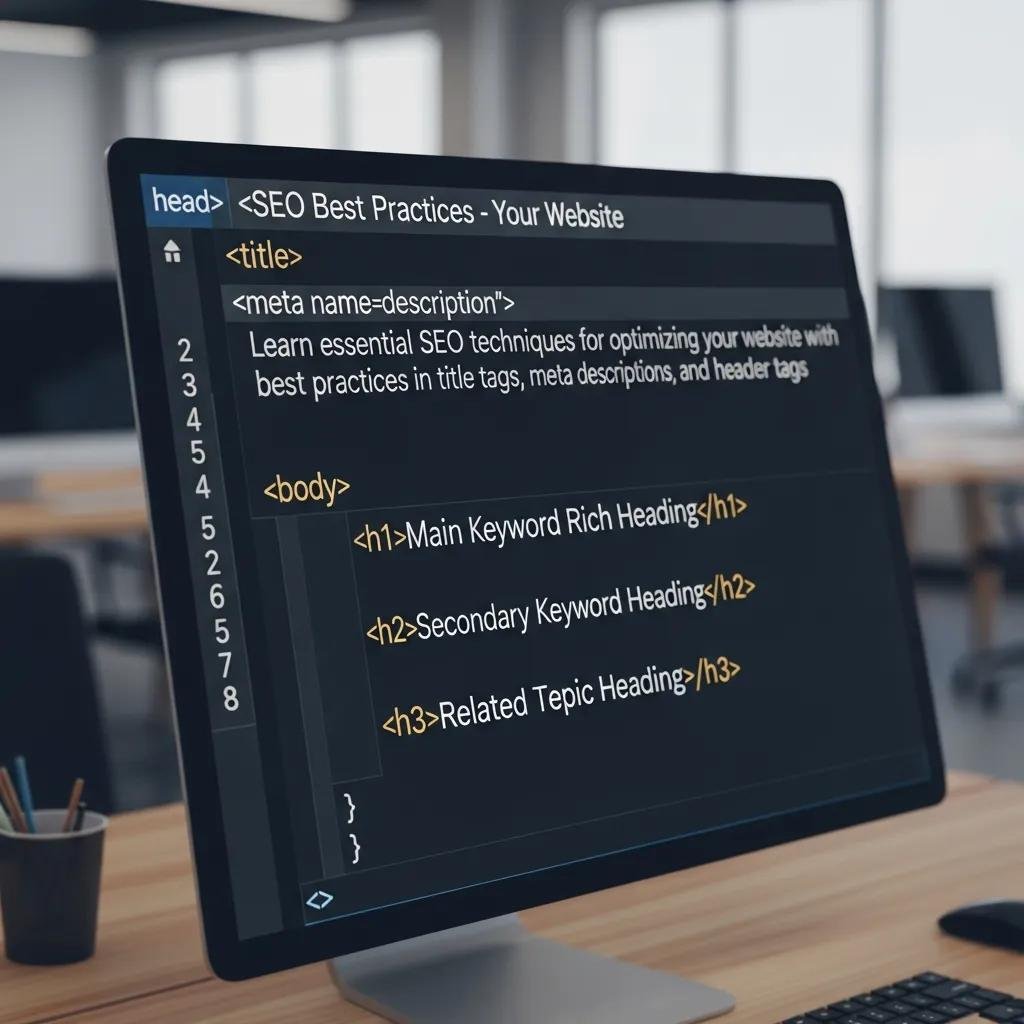
The core HTML elements play a vital role in on-page SEO by providing search engines with essential information about the content of a webpage. These elements include title tags, meta descriptions, and header tags, which collectively help improve search visibility and user experience. Properly optimizing these elements ensures that search engines can accurately index and rank your content, ultimately driving more organic traffic to your site.
Title tags and meta descriptions are crucial for SEO performance as they directly impact click-through rates (CTR). A well-crafted title tag should be concise, ideally under 60 characters, and include relevant keywords to attract users’ attention. Similarly, meta descriptions, which should be around 150-160 characters, provide a brief summary of the page’s content. Including targeted keywords and a compelling call to action can significantly enhance CTR, potentially leading to improved rankings.
Header tags (H1, H2, H3, etc.) are essential for organizing content and improving readability. The H1 tag typically represents the main title of the page, while H2 and H3 tags denote subheadings that break down the content into manageable sections. This hierarchical structure not only aids user navigation but also helps search engines understand the content’s context. Proper use of header tags can enhance SEO by signaling the importance of specific topics within the content.
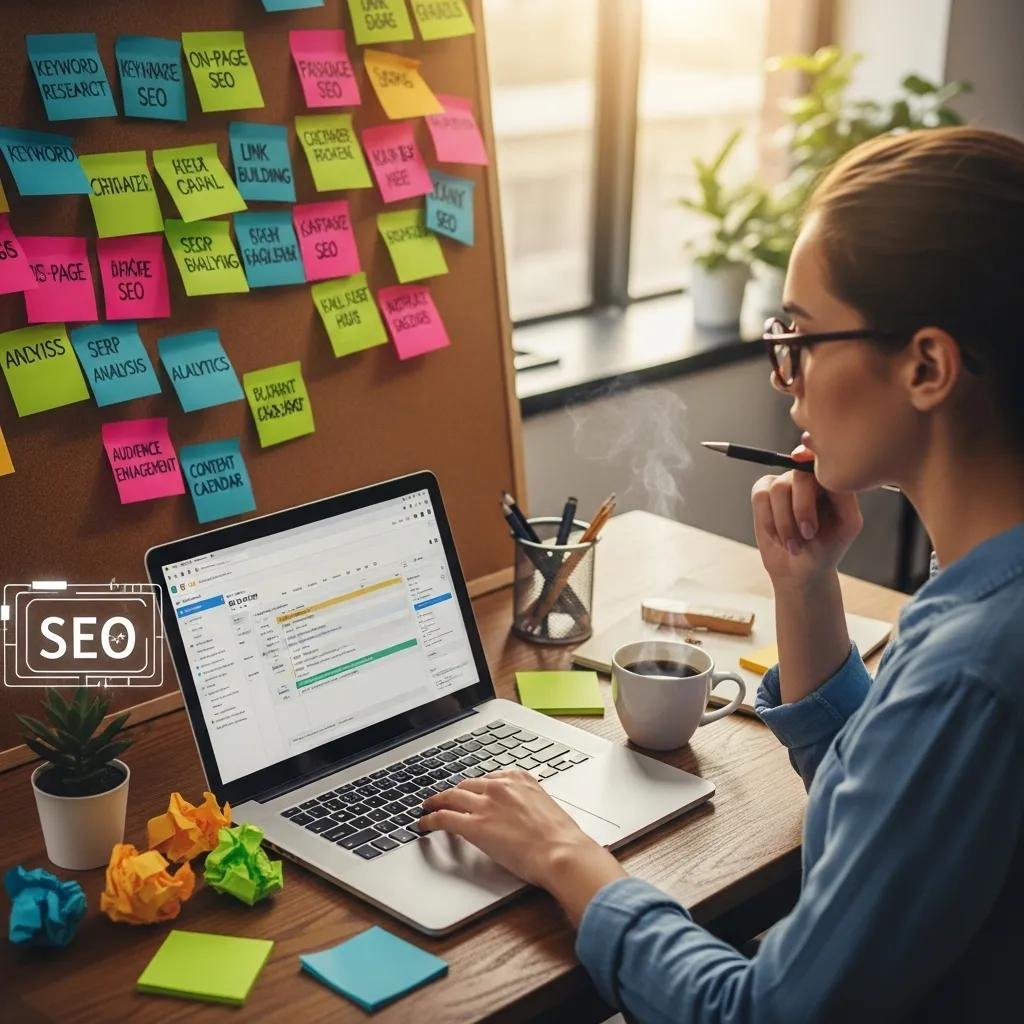
Content optimization is a fundamental aspect of on-page SEO that involves enhancing the quality and relevance of your content to align with user intent. By focusing on keyword research, user intent, and E-E-A-T principles, you can create content that resonates with your audience and ranks well in search results. This section will explore various techniques to optimize your content effectively.
Keyword research is the foundation of effective content optimization. It involves identifying the terms and phrases that users are searching for in relation to your topic. Understanding user intent—whether informational, navigational, or transactional—allows you to tailor your content to meet the needs of your audience. Tools like Google Keyword Planner, SEMrush, and Ahrefs can help identify high-volume keywords and long-tail variations that can drive targeted traffic to your site.
E-E-A-T, which stands for Experience, Expertise, Authoritativeness, and Trustworthiness, is a framework that Google uses to assess the quality of content. By demonstrating experience and expertise in your field and providing valuable, well-researched information, you can enhance your content’s authority. Incorporating credible sources, citing research studies, and showcasing author credentials can significantly improve your content’s trustworthiness, leading to better rankings.
Technical on-page SEO practices are essential for ensuring that your website is optimized for both search engines and users. These practices include implementing structured data markup, optimizing page speed, and ensuring mobile-friendliness. By addressing these technical aspects, you can enhance your website’s performance and improve user experience.
Structured data markup is code that helps search engines understand the content of your webpage more effectively. By implementing schema markup, you can enable rich snippets, which enhance your search results with additional information such as ratings, reviews, and images. This not only improves visibility but also increases the likelihood of attracting clicks from users. Implementing structured data can lead to better SERP features, ultimately driving more traffic to your site.
Further emphasizing the importance of structured data, one source highlights its role in explaining content to search engines and improving visibility.
Schema Markup: Enhancing SEO Rankings & Click-Through Rates
This chapter covers schema markup, which is optional code that can be added to a page to better explain the purpose of the content on that page to search engine robots. As well, schema markup can help enhance rankings, leading to higher click-through rates from search results. However, schema markup needs to be added correctly and accurately reflect the content presented on the page to help—if schema markup is used incorrectly, it can be ignored or, worse, can lead to errors or manual actions.
Schema and structured data markup, 2023
Page speed and mobile-friendliness are critical factors in modern SEO. A fast-loading website enhances user experience, reducing bounce rates and increasing engagement. Google considers page speed as a ranking factor, making it essential to optimize images, leverage browser caching, and minimize server response times. Additionally, with the increasing use of mobile devices, ensuring that your website is responsive and mobile-friendly is crucial for retaining visitors and improving search rankings.
Advanced semantic SEO techniques focus on improving the contextual relevance of your content. By leveraging entity-based SEO and AI-driven strategies, you can enhance your on-page optimization efforts and build topical authority. This section will explore these advanced techniques and their impact on SEO.
Entity-based SEO involves optimizing content around specific entities—people, places, or concepts—rather than just keywords. By creating content that addresses related entities and their relationships, you can establish topical authority and relevance. This approach helps search engines understand the context of your content, improving its chances of ranking for a broader range of related queries.
AI and LLM (Large Language Model) visibility are transforming on-page SEO strategies. Tools powered by AI can analyze vast amounts of data to identify trends, optimize content, and automate repetitive tasks. By utilizing AI-driven insights, you can enhance your content strategy, ensuring that it aligns with current search engine algorithms and user preferences. This not only improves your SEO efforts but also saves time and resources.
The transformative impact of AI on SEO is further underscored by research detailing its role in optimizing online visibility and content.
AI in SEO: Optimizing Online Visibility & Content
The integration of Artificial Intelligence (AI) into Search Engine Optimization (SEO) practices has ushered in a new era of digital marketing, characterized by transformative innovations and ethical considerations. This paper delves into the profound impact of AI on SEO, elucidating its multifaceted role in revolutionizing traditional approaches to optimizing online visibility and user engagement. Through advanced algorithms and machine learning techniques, AI-powered SEO tools offer unparalleled capabilities, including enhanced efficiency in keyword research, content optimization, and trend analysis. Moreover, AI enables personalized content creation tailored to individual user preferences, driving increased traffic and conversion rates.
Optimizing SEO with AI: Achieving Success Through Responsible Innovation, A Mitra, 2024
An effective internal linking strategy is crucial for enhancing user experience and improving SEO. Internal links help users navigate your website and distribute page authority across your site. This section will discuss best practices for anchor text and link placement, as well as how internal linking supports topical clusters and user experience.
When implementing internal links, using descriptive anchor text is essential. Anchor text should provide context about the linked page, helping users understand what to expect. Additionally, placing internal links naturally within the content enhances user experience and encourages further exploration of your site. Avoid over-optimizing anchor text with exact match keywords, as this can be perceived as spammy by search engines.
Internal linking supports topical clusters by connecting related content, which helps search engines understand the structure of your website. This organization enhances user experience by guiding visitors to relevant information, keeping them engaged longer. By strategically linking related articles and pages, you can create a cohesive content ecosystem that improves both SEO and user satisfaction.
| HTML Element | Purpose | Best Practices |
|---|---|---|
| Title Tag | Defines the title of the page | Keep under 60 characters, include primary keywords |
| Meta Description | Summarizes page content | Limit to 150-160 characters, use action-oriented language |
| Header Tags | Organizes content structure | Use H1 for main title, H2 for sections, H3 for subsections |
This table summarizes the essential HTML elements for on-page SEO, highlighting their purposes and best practices for optimization.
In conclusion, mastering on-page SEO best practices is essential for improving your website’s visibility and attracting organic traffic. By focusing on core HTML elements, optimizing content, implementing technical practices, and utilizing advanced semantic strategies, you can enhance your search engine rankings. For businesses looking to improve their online presence, Digital Service Solutions specializes in AI-driven hypergrowth SEO strategies, offering services such as Google Business Profile optimization and local SEO to help you achieve your goals.